Amway: What It Is and How It Works (2026)
Amway is the largest direct-selling company on earth — and one of the most misunderstood. Here's the plain-English version: what it sells, how its distributors earn, what it costs to start, and the honest context most explainers skip.
Amway is the world's largest direct-selling company — 2025 sales of $7.3 billion across 100+ countries and territories. Its Independent Business Owners sell nutrition, beauty, and home products, earning retail margins on their own sales plus bonuses on team volume. Registration is free; renewal runs $55 per year.
Amway in 30 seconds
Figures from Amway's own published pages and its 2025 U.S. Income Disclosure, checked October 2026.
The company
Verdict Amway is the company the entire direct-selling industry is measured against — the biggest, the oldest of the modern giants, and the one regulators tested in court. Understanding Amway is understanding the business model itself.
Amway was founded in 1959 in Ada, Michigan, by Rich DeVos and Jay Van Andel — two friends who started by selling a biodegradable cleaner door to door. It remains privately held and family-controlled. In 2025 the company reported $7.3 billion in sales (announced March 31, 2026), making it the world's largest direct-selling company by revenue, with more than one million IBOs across 100+ countries and territories (Direct Selling News).
The catalog spans a broad range of health and wellbeing products, anchored by three flagship brands: Nutrilite (vitamins, supplements, and organics — the brand Amway was effectively built on), Artistry (skincare and cosmetics), and XS (sports nutrition and energy), plus the Amway Home care line.
How the business works
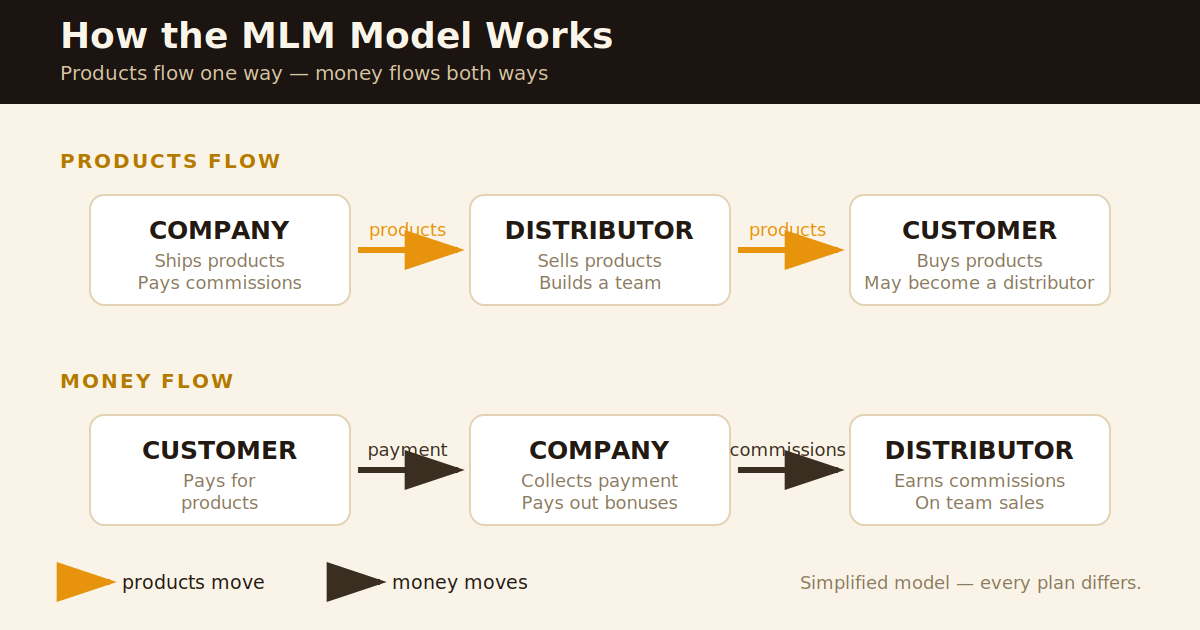
Amway sellers are called Independent Business Owners (IBOs). Amway's own materials describe two ways IBOs earn:
- Retail margin — buy at the IBO price, sell at the customer price, keep the difference.
- Bonuses — monthly performance bonuses based on the sales volume you and your sponsored team generate.
One structural detail that matters: Amway's plan has monthly volume thresholds to qualify for bonuses — the classic dynamic where IBOs buy product themselves to stay qualified. That's standard across the industry, and it's one of the honest costs the opportunity math has to include. We break that math down in our Amway opportunity review.
What it costs
Amway states there is no fee to register — first-year registration (valued at $55) is complimentary, along with free training and digital tools. Renewal runs $55 per year, plus an optional $16 membership in the IBOAI (the independent IBO association). There are no required inventory purchases.
Watch out "Free to join" is true and also incomplete. The real costs of any Amway business are the products you buy and use, the tools and event tickets many teams encourage, and your time. None of that appears on the registration page — budget for it honestly.
The regulatory context (why it matters)
Two facts belong in any honest Amway explainer. First: in 1979, the FTC ruled Amway was not an illegal pyramid scheme — a landmark decision that effectively wrote the legal boundary for the whole industry. Second: regulators never stopped watching. In September 2026, the FTC and the state of Washington filed a complaint alongside a proposed order under which Amway and two affiliated training groups would pay $225 million — the largest monetary recovery the FTC has ever obtained from a multilevel marketing company — over allegations of misleading earnings claims and pressure to buy products that were difficult to resell. Proposed terms include requiring IBOs to resell at least 70% of what they purchase each month (ConsumerAffairs, September 24, 2026). Amway disputes the allegations, and the order still awaits a federal judge's approval.
Our take: the model is legal and long-lived, and the regulatory pressure is real and ongoing. Both things are true. Anyone joining should read the current rules, not the 1979 headline.
Who it's actually for
- People who genuinely like the products and would buy them anyway
- Patient builders comfortable with a years-long team-building curve
- Anyone who wants the lowest-cost entry in the industry ($0 to start)
- Not for anyone expecting fast income — the company's own disclosure shows modest typical earnings (see our opportunity review)
- Product prices run above mass-retail equivalents — a harder retail sale
- The 2026 regulatory overhang means the rules may keep shifting
How we researched this
Company facts verified October 13, 2026 against Amway's own published pages (amway.com registration and insider pages), the company's 2025 U.S. Income Disclosure, Amway's March 31, 2026 sales announcement, Direct Selling News industry coverage, and ConsumerAffairs' September 2026 reporting on the FTC/Washington matter. We accept no paid placements.
Frequently asked questions
Is Amway a pyramid scheme?
In 1979, the FTC ruled that Amway was not an illegal pyramid scheme — the landmark case for the industry. In September 2026, the FTC and Washington state filed a complaint alongside a proposed $225 million order over alleged misleading earnings claims, which shows regulators still scrutinize the model closely. Legal does not automatically mean lucrative; read our opportunity review for the earnings math.
How much does it cost to join Amway?
Registration is free — Amway covers the $55 first-year registration. Renewal is $55/year plus an optional $16 IBOAI membership. There are no required inventory purchases, but expect real ongoing costs in products, tools, and events.
What does Amway sell?
Amway's catalog covers health and wellbeing products, led by Nutrilite (supplements), Artistry (skincare and cosmetics), XS (sports nutrition and energy), and Amway Home care products.
Who owns Amway?
Amway is privately held and headquartered in Ada, Michigan. Founded in 1959 by Rich DeVos and Jay Van Andel, it remains family-controlled.
Want the system behind this?
The MLM Lead System Starter Kit is free: how distributors capture leads, follow up automatically, and keep conversations moving — the system most never get.
Free · double opt-in · unsubscribe anytime.